Sphynx Level Cat Knowledge Gauntlet







Quiz Complete!
Whiskerless Wonders: The Science and Story Behind Your Stealthy Companion

Introduction Cats can seem like living riddles: quiet one moment, sprinting across the room the next, then fixing you with a stare that feels oddly intentional. Behind the cute habits is a finely tuned predator built for balance, communication, and precise movement. Understanding how cats sense the world and why they behave the way they do makes their quirks even more fascinating.
Senses and balance: built for stealth A cat’s body is designed to gather information quickly and move with control. Their hearing is especially sharp, helping them detect high pitched sounds made by small prey. Ears can swivel to pinpoint direction, and many cats can track a sound source with remarkable accuracy. Vision is optimized for low light. Cats have large pupils and a reflective layer in the eye that improves night sensitivity, which is why their eyes can shine in dim conditions. They do not see in complete darkness, but they need far less light than humans.
Balance comes from several systems working together. The inner ear plays a major role, and the tail helps with stability during tight turns and leaps. The famous righting reflex lets many cats reorient midair so they land on their feet, a mix of flexible spine, quick reflexes, and body awareness. Their whiskers are another key tool. Whiskers are specialized hairs connected to sensitive nerves that detect subtle air currents and contact. They help cats judge gaps, navigate in tight spaces, and sense nearby movement, especially when light is low.
Communication: slow blinks, scents, and vocal surprises Cats communicate with a blend of body language, scent, and sound. A slow blink is often a sign of comfort and trust, not sleepiness. Tail position, ear angle, and posture can signal everything from curiosity to irritation. Scent is just as important. Cats have scent glands on their cheeks, paws, and other areas. When they rub against furniture or people, they are not only being affectionate, they are also marking a familiar environment.
Vocalizations are more complex than many people realize. Adult cats often meow primarily at humans, and individuals may develop unique sounds that work on their household. Purring is commonly linked to contentment, but cats may also purr when stressed or in pain, possibly as a self soothing mechanism. Hissing and growling are clear distance increasing signals, while chirps and trills can be used in friendly greetings or hunting excitement.
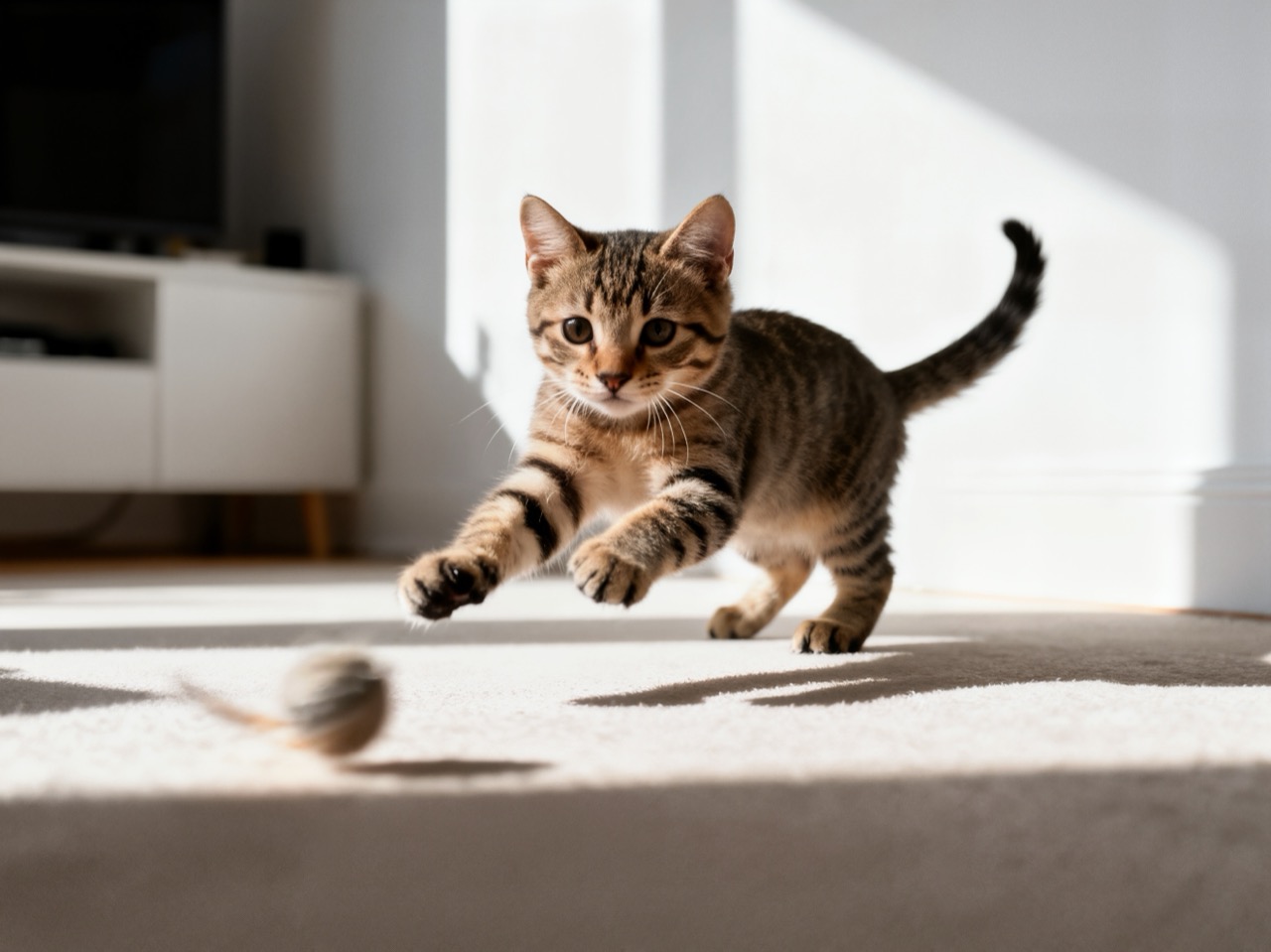
Hunting behavior and uncanny precision Even well fed cats retain strong hunting instincts. Their play often mirrors hunting sequences: stalking, pouncing, grabbing, and biting. The classic zoomies can be a burst of energy, stress release, or a response to pent up hunting drive. Cats are also efficient at conserving energy, which is why they can switch from stillness to sudden action. Their claws provide traction and grip, and their flexible spine allows powerful leaps and rapid acceleration. Specialized teeth and a rough tongue help with grooming and, in a hunting context, processing food.
Culture, domestication, and breed curveballs Domestic cats likely began living alongside humans thousands of years ago, drawn to rodent rich grain stores. Over time, the relationship benefited both sides: humans gained pest control, and cats gained reliable food and shelter. Cats have held many cultural roles, from revered symbols in some ancient societies to working animals on ships and farms.
Breed differences can be dramatic, but most of a cat’s behavior comes from individual personality, early socialization, and environment rather than breed alone. Some cats have reduced or absent whiskers due to genetics or medical issues, but whiskers are important sensory tools and should never be trimmed. Anatomy also varies: some cats have extra toes, and coat types range from nearly hairless to extremely dense, affecting grooming needs and temperature comfort.
Conclusion Cats are not mysterious because they are unknowable, but because their biology is so specialized. From whisker guided navigation and night adapted vision to scent based communication and precision movement, they are built for stealth and subtlety. Learning the real science behind the slow blink, the purr, and the sudden sprint makes every interaction richer and turns everyday cat watching into a small expedition into evolution and behavior.



.jpg)